BankToons · Investing
How to Invest in Stocks for Beginners: Explained Simply
How to invest in stocks for beginners, told through one story. Sam started at 25 in 1985 and put $250 into the stock market every month. Then the crashes came: 1987, 2000, 2008 and 2020. Sam never sold. By the end of 2025, Sam had put in $123,000, and the account was worth about $2.1 million.
There was no trick. That is simply the S&P 500, a list of about 500 of America's biggest companies, counting the cash those companies paid out. From 1985 through 2025 it grew almost 12% a year on average. The next 40 years could be better or worse. Nobody knows.
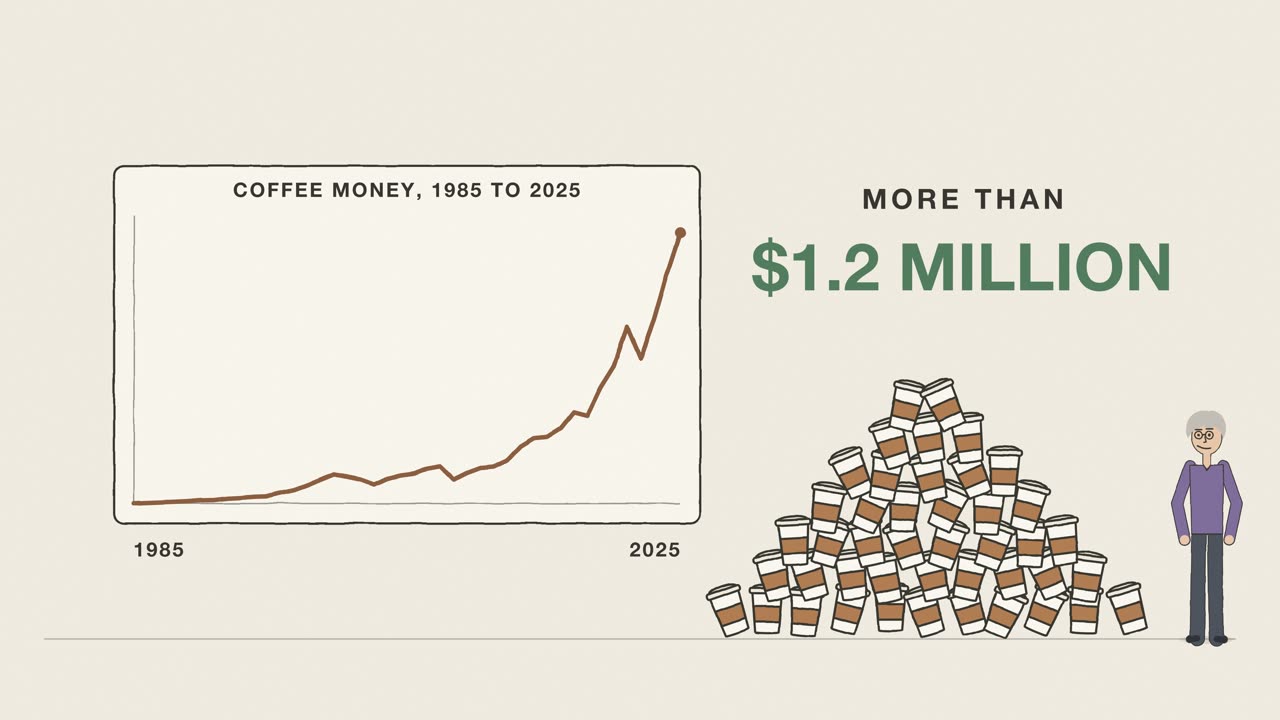
Step 1: save an emergency fund first, cash for a lost job, a broken car or a hospital bill, usually three to six months of living costs. Step 2: use the accounts that save on taxes, like a 401(k) at work (many employers add money when you do, called a match) and a Roth IRA (up to $7,500 a year in 2026). Step 3: buy the whole market with an index fund instead of picking stocks; over 15 years, about nine in ten professional fund managers fall behind the S&P 500. Step 4: make it automatic, and reinvest the dividends. Even $5 a day, about the price of a coffee, invested the same way from 1985 grew to more than $1.2 million by 2025.
Then the hardest step: do not sell when it crashes. Sam's account fell from about $222,000 at the end of 1999 to about $146,000 three years later, and lost about $100,000 in 2008. Sam kept buying, and by 2019 it was nearing $900,000. Starting early matters too: $250 a month from 1996 grew to about $574,000 by 2025, and the same from 2006 to about $265,000.
Our take: if you are just starting, skip the stock picking. Set up an automatic monthly buy of a low cost index fund, even a small one, raise it a little each time your pay goes up, and when the news says crash, check that it is still running. This video is for education, not personal financial advice.
What if you invested $250 a month in the S&P 500 since 1985?
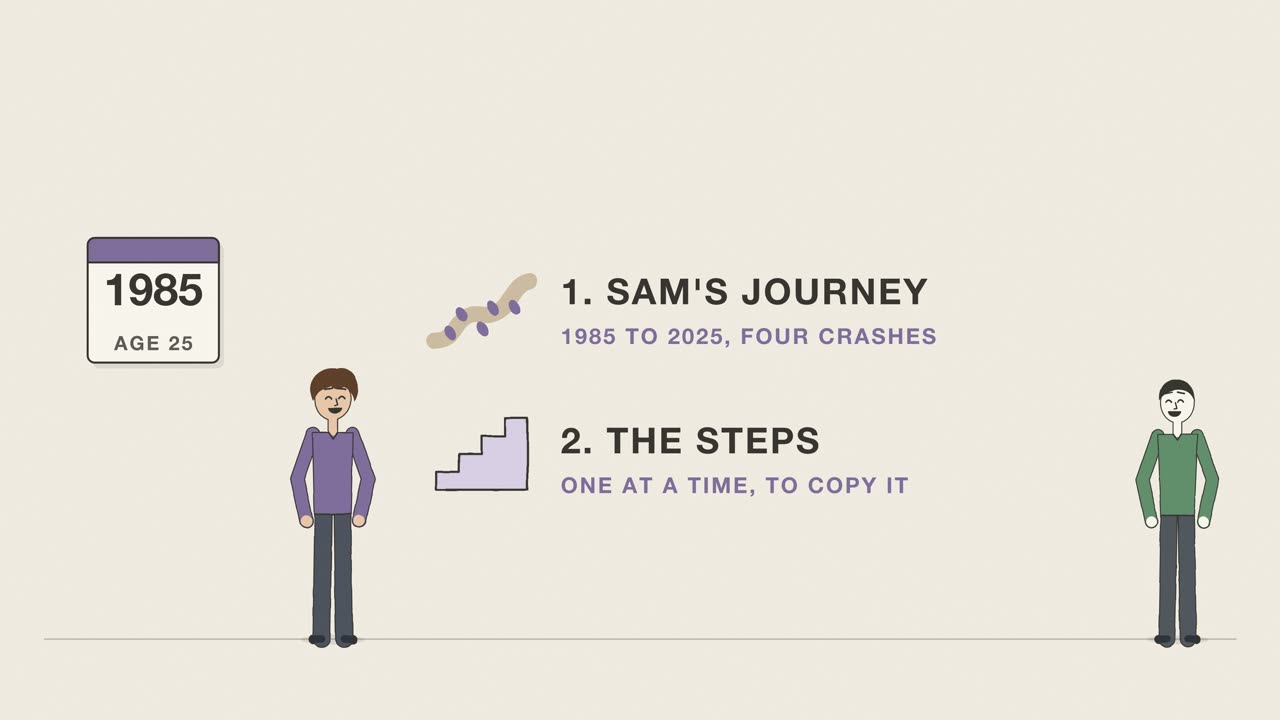
Picture a 25 year old named Sam in 1985. Sam starts putting $250 into the stock market every month. Then the crashes come, one after another.
What was it all worth 40 years later and how would a beginner copy it? First, let's learn through Sam's journey. Then each step, one at a time.
Black Monday 1987 and every crash since
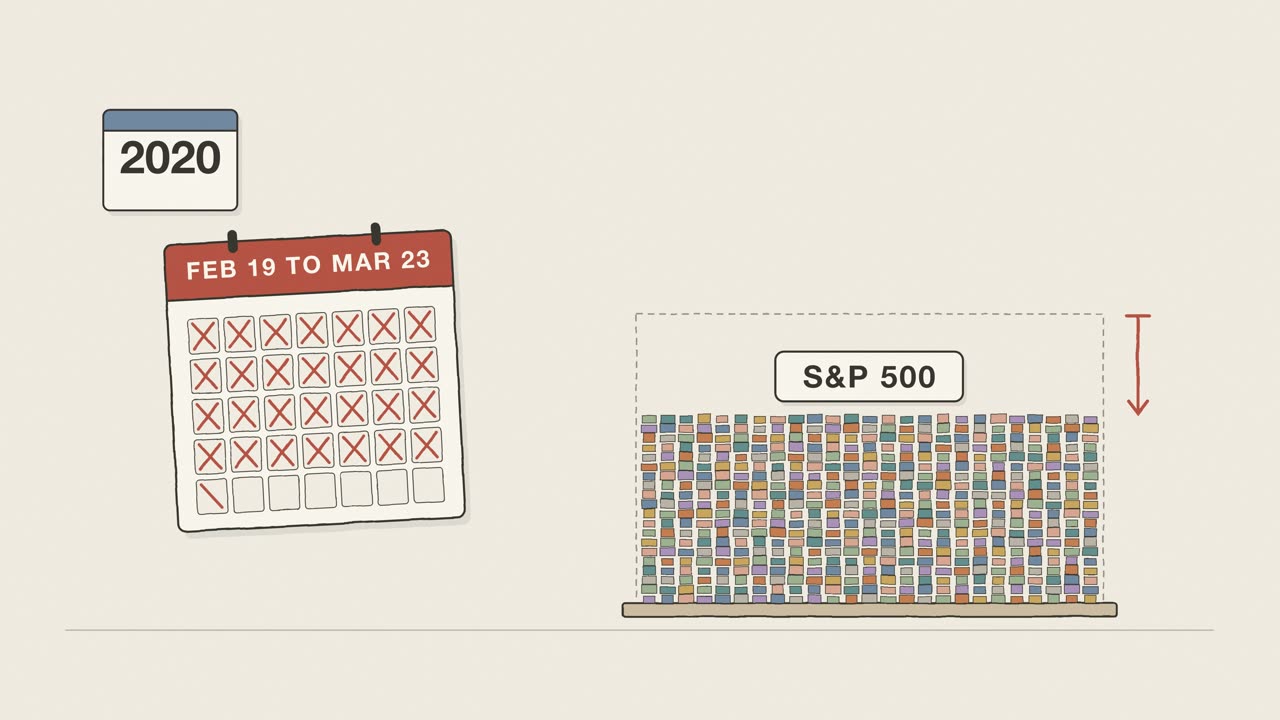
In October of 1987, the Dow fell about 22% in a single day. People called it Black Monday. Sam's friends said to sell, but Sam kept buying.
In 2,000, the internet bubble burst. The S&P 500 tracks about 500 of America's biggest companies. Over the next 2.
5 years, it lost about half its value. In 20 oh eight, the big banks nearly collapsed, and stocks fell by more than half again. In 2020, the market dropped about a third in a single month.
What $250 a month became by 2025
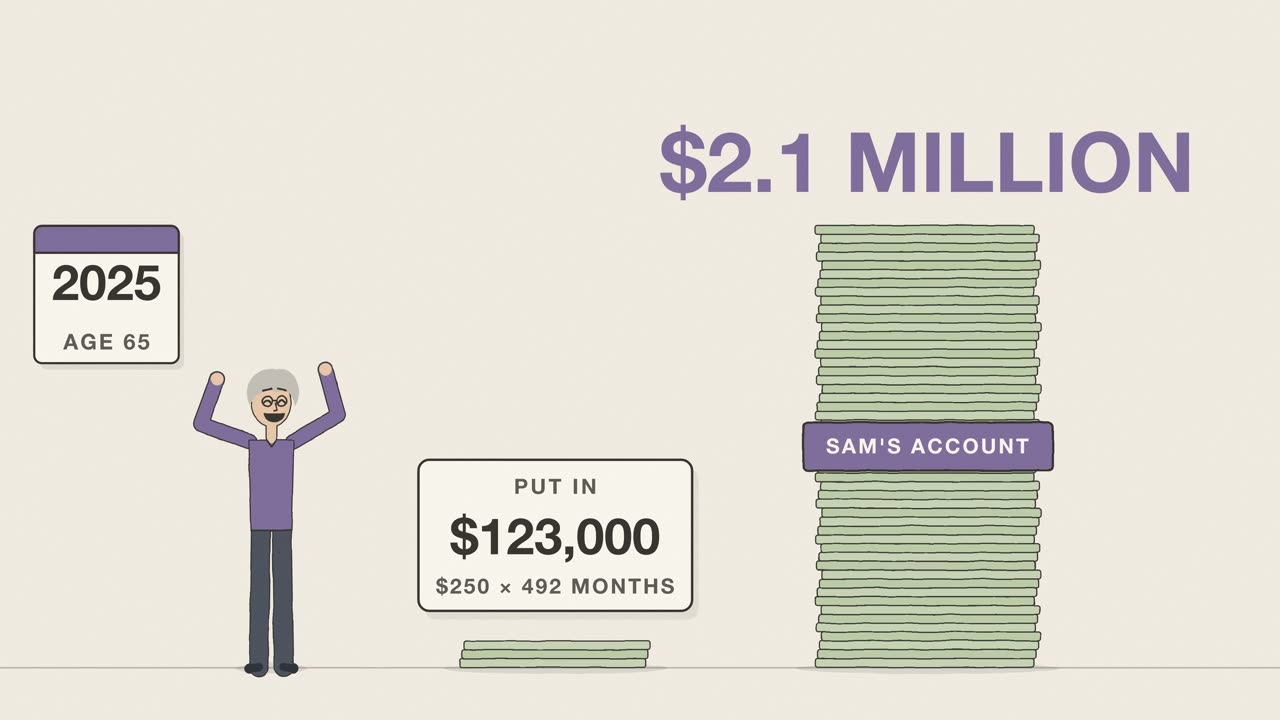
Every time, Sam kept the monthly buys going. Sam never sold. By the end of 2025, Sam had put in $123,000.
The account was worth about 2.1 million.
S&P 500 average return since 1985
There was no trick. That is simply the S&P 500 from 1985 through 2025. It counts the cash the companies paid out too.
It grew almost 12% a year on average. These numbers come from a long running record kept by a New York University professor. The next 40 years could be better or worse.
Nobody knows. But Sam did a few boring things right, and anyone can copy them.
Step 1: build an emergency fund first
Step one. Save before buying any stock. This is called an emergency fund.
That is cash set aside for a lost job, a broken car, or a hospital bill. Most planners suggest three to six months of living costs. A full year is even safer.
It sits in a savings account, not in stocks. Here is why it comes first. Stocks can fall by half when you least expect it.
Without a cushion, a bad month can force you to sell at the bottom. The emergency fund is what lets the rest of the money stay put.
Step 2: a 401(k) and the employer match
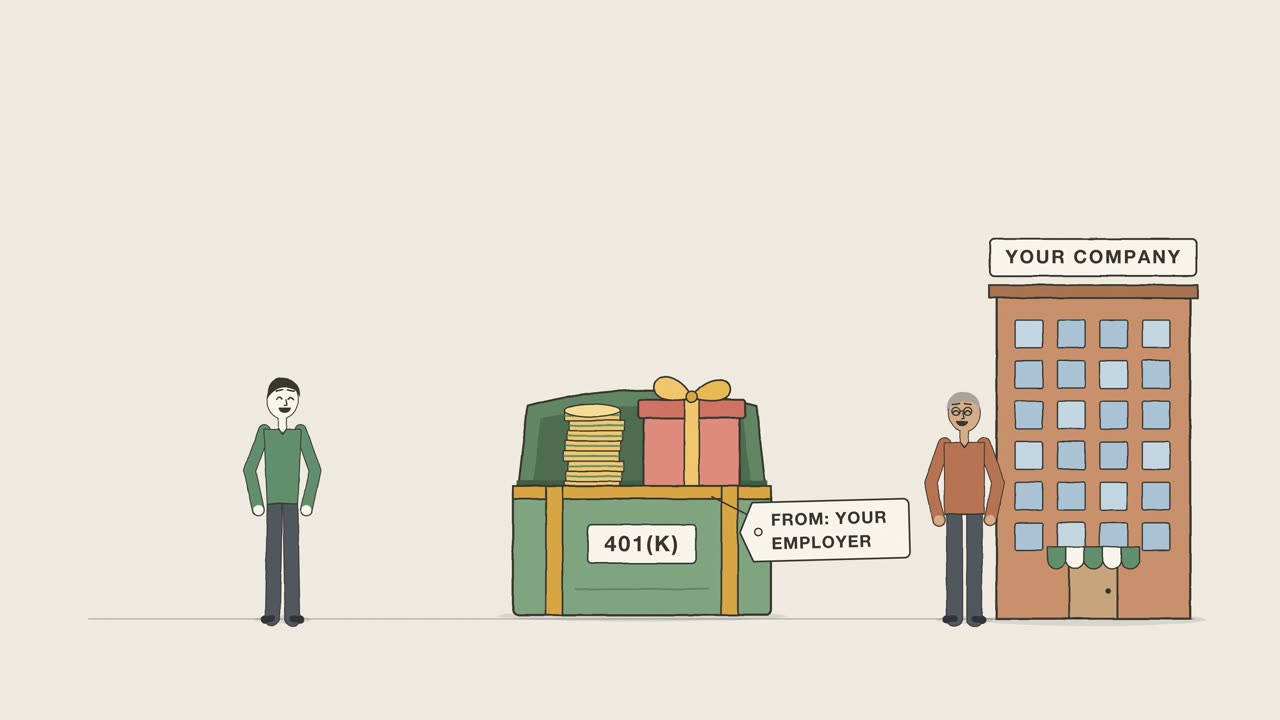
Step two is the account, and depending on where the money sits, you can save thousands in taxes. Many jobs offer a four-oh-one-k. That is a retirement account run through your employer.
Many employers add money when you do. That is called a match. Put in 3% of your pay, and the company might add 3% more.
It is the closest thing to free money in investing.
Roth IRA for beginners
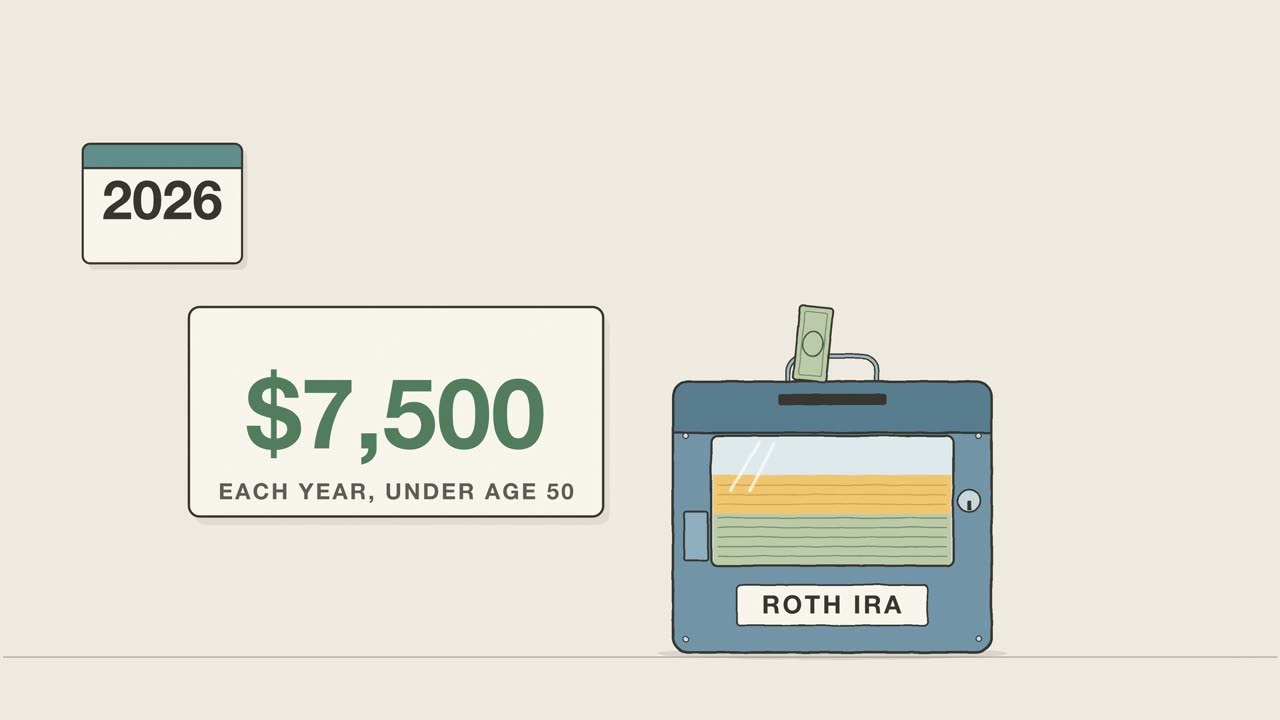
Next is the Roth IRA. IRA stands for individual retirement account. Anyone with a paycheck can open one at a brokerage.
A brokerage is a company that holds your investments, like a bank for stocks. With a Roth, the money goes in after tax. Then it grows, and you pay no tax on it later.
In 2026, the limit is $7,500 a year.
Can you take money out of a Roth IRA?
A common worry is that the money is locked away until retirement. Not quite. What you put into a Roth, you can take back out at any time.
Only the growth has to wait, usually until age 59.5. Anything beyond that can go into a regular brokerage account.
It has no limit, but you pay tax on the gains.
Step 3: why most pros fall behind the S&P 500
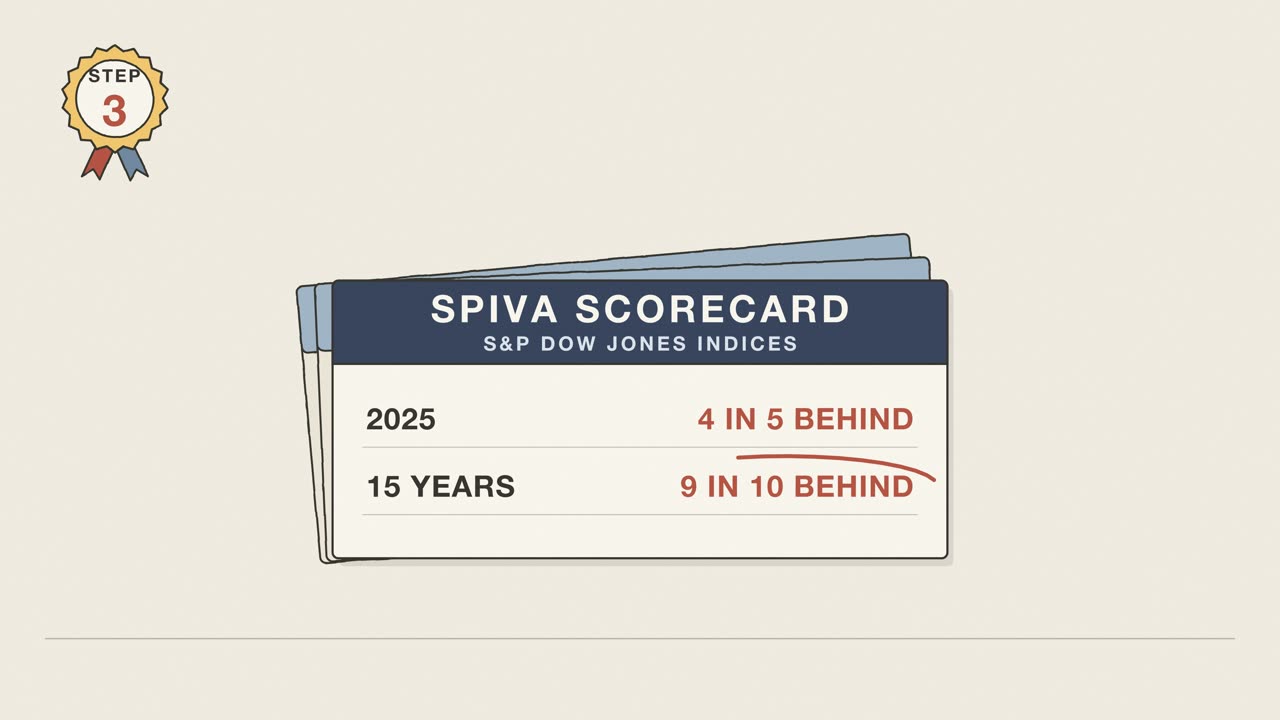
Step three is what to buy. The hard truth about picking stocks is that even the professionals mostly cannot do it. In 2025, about four in five managers of big stock funds did worse than the S&P 500.
Over 15 years, it is about nine in 10. That comes from a yearly scorecard kept by S&P itself.
Index funds for beginners: the music chart idea
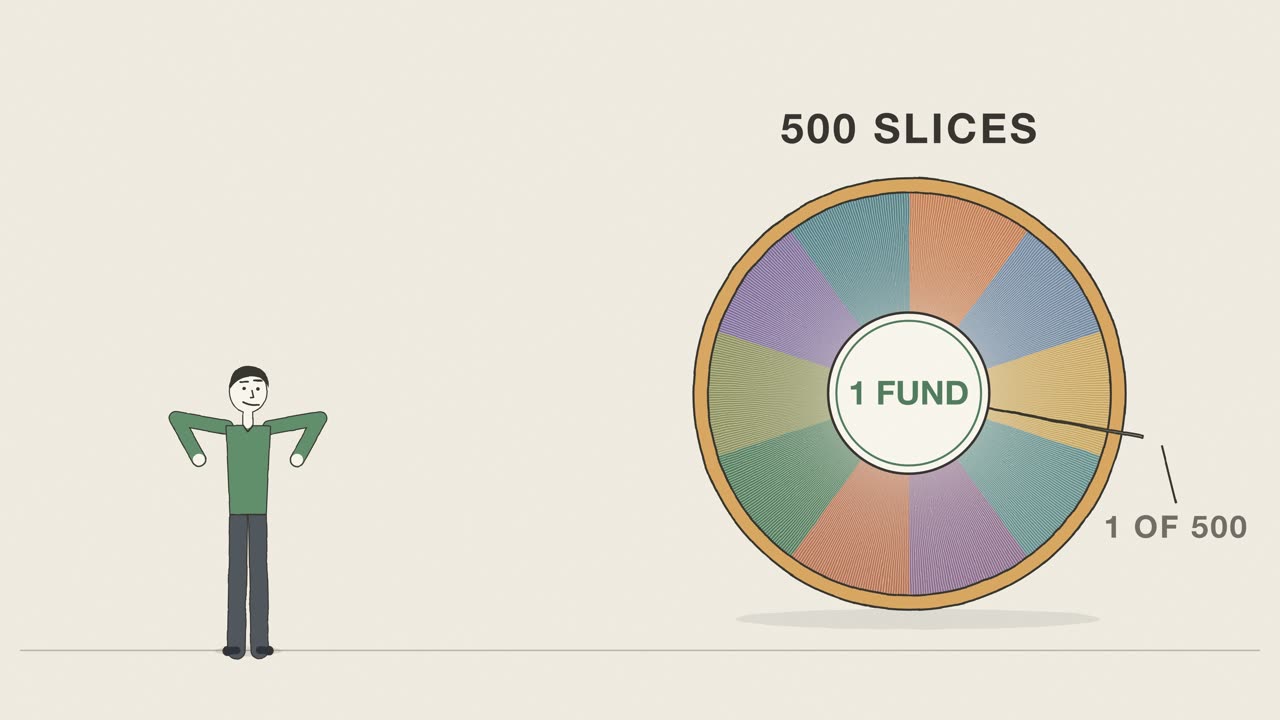
So instead of guessing the winners, a beginner can buy all of them at once. That is called an index fund. Think of the music charts.
A song that sells climbs the chart. A song that stops selling drops off. Nobody has to guess the hits.
The chart updates itself. The S&P 500 works the same way, with companies instead of songs. Remember, it is a list of about 500 of the biggest companies in America.
When a company shrinks, it gets dropped. A growing company takes its place. An index fund owns a slice of every company on the list.
One purchase, and you own a piece of 500 companies. If one company fails, the fund barely notices.
Fees, brokerages and fractional shares
The fund charges a small yearly fee, about $3 for every $10,000 at the cheapest ones. Big brokerages like Fidelity, Charles Schwab, E-Trade and Robinhood charge nothing to buy them. You do not need much to start.
A share is a small piece of a company. Each company is split into a set number of them. Big brokerages also sell fractional shares.
That means you can buy a piece of one share with just a few dollars.
Step 4: automatic investing, $5 a day
Step four is the one that did the most for Sam. Sam made it automatic. Most brokerages let you pick an amount, and a schedule, every week, or every month.
The money leaves your bank and buys the fund on its own. You set it once and leave it alone. $5 a day is about the price of a coffee.
That comes to about $150 a month. Invested on Sam's schedule, it grew to more than $1.2 million.
That is a lot of coffee.
Dividend reinvestment and dollar cost averaging
There is one more setting to switch on, called dividend reinvestment. A dividend is cash a company pays to the people who own shares. Reinvesting means that cash buys more of the fund by itself.
Sam's 12% a year counts on it. Buying on a schedule also fixes a habit nobody likes to admit. When prices fall, most people stop buying.
A fixed amount every month buys more shares when prices are low. People call this dollar cost averaging. It takes the guesswork out of buying.
What happens to your money in a stock market crash
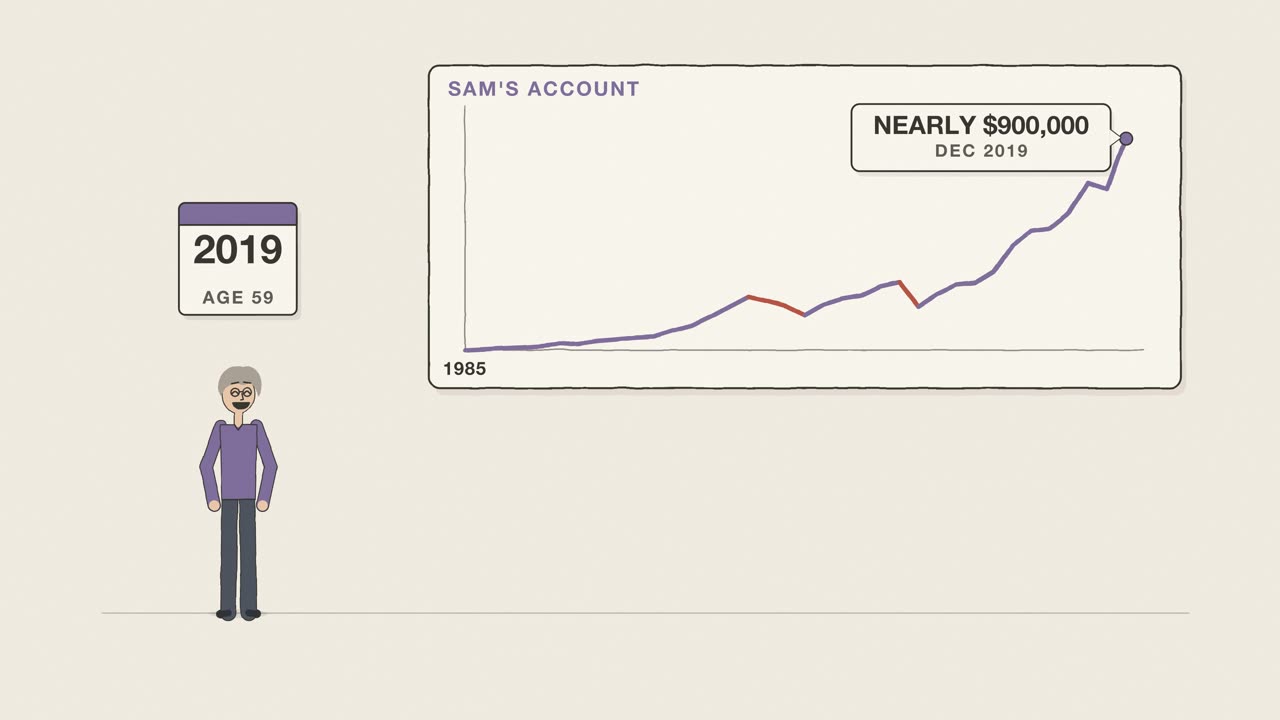
Now the hard part. Watching it fall. At the end of 1999, Sam's account was worth about $222,000.
Three years later, it was down to about 146,000. Sam added money the whole time, and still had less. Then it happened again.
At the end of 20 oh seven, Sam had about $284,000. One year later, about 183,000. That is about $100,000 gone in a single year, on paper.
This is where most people sell. Selling turns a loss on paper into a real one. Sam kept buying, at the lowest prices in years.
By 2019, Sam was nearing 900,000.
Why starting early matters
Time does most of the heavy lifting. Picture two people who each invest $250 a month. One starts in 1996.
The other waits 10 years and starts in 2006. By the end of 2025, the first has about $574,000. The second has about 265,000.
The early starter put in only $30,000 more, and ended with more than twice as much.
How to invest in stocks for beginners, in short
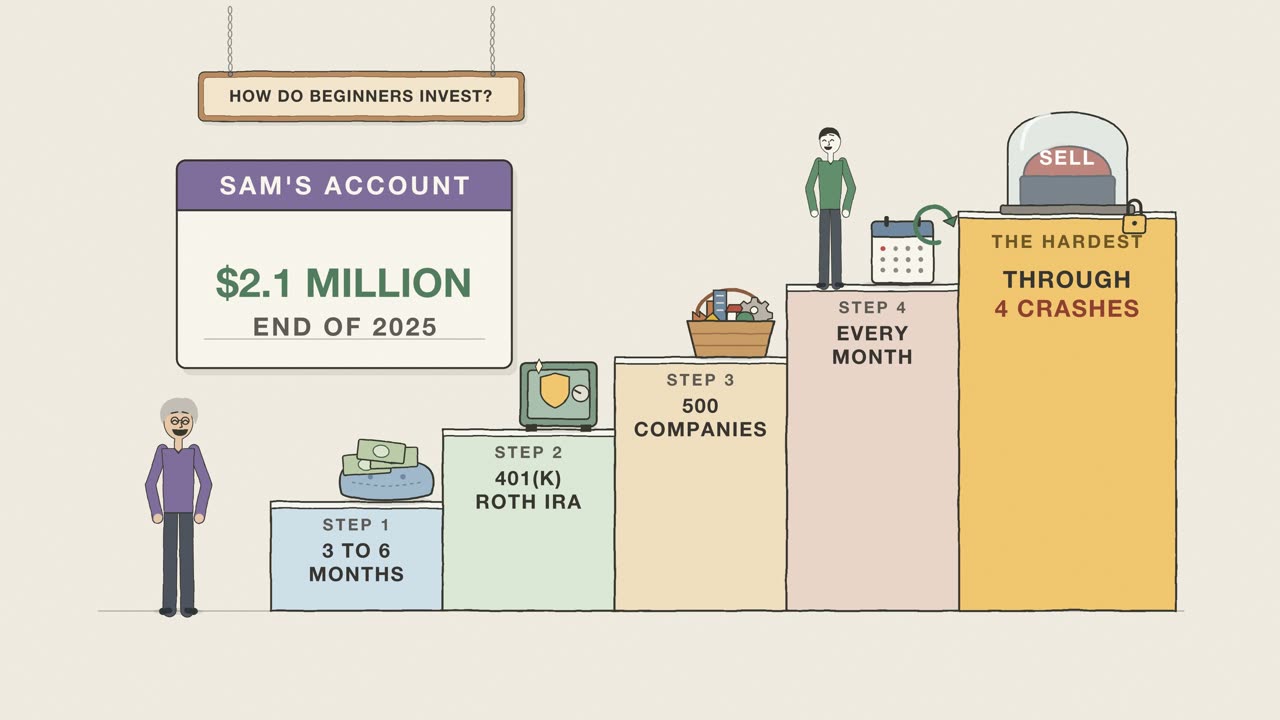
So, how does a beginner invest in stocks? Build an emergency fund first. Use the accounts that save on taxes.
Buy the whole market with an index fund. Make it automatic, and reinvest the dividends. Then the hardest step of all.
Do not sell when it crashes. Sam did nothing fancier than that, and $250 a month became about 2.1 million.
Our take
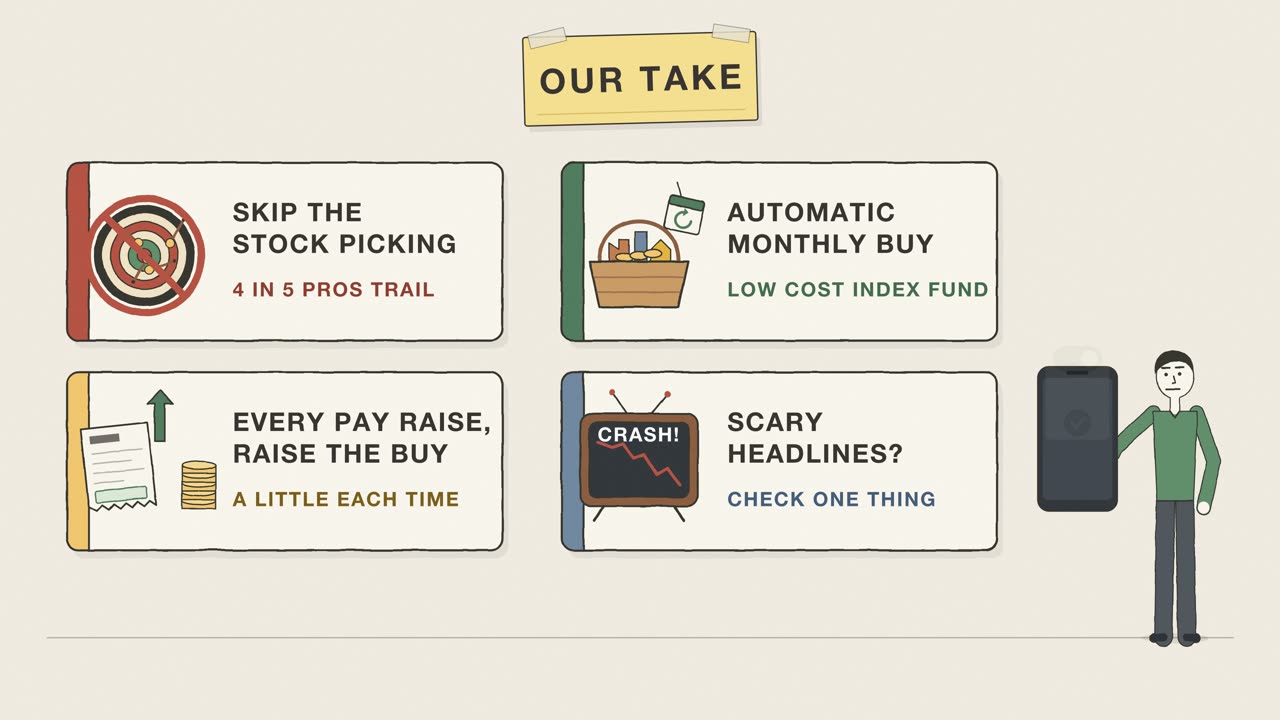
Here is our take. If you are just starting, skip the stock picking. Set up an automatic monthly buy of a low cost index fund, even a small one.
Raise the amount a little each time your pay goes up. And when the news says crash, check that your monthly buy is still running. Then close the app.
Sam was not a genius. Sam stayed disciplined through four crashes. The best time to start was 1985.
The next best time is today.