
BankToons · Investing
Why the Rich Get Richer: 5 Rules Anyone Can Copy
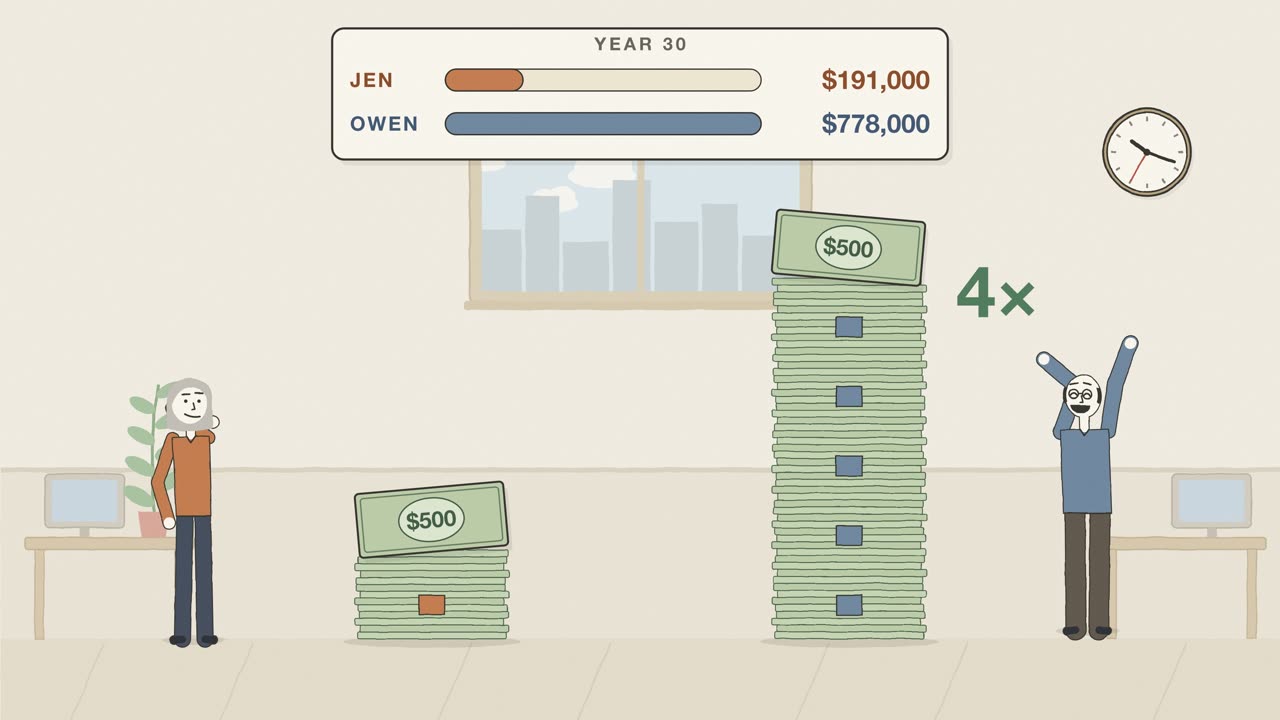
Why do the rich get richer? In this BankToons explainer, two coworkers, Jen and Owen, earn the same pay, about $65,000 a year, and each set aside $500 a month starting in October 2026. Jen keeps hers in a savings account. Owen buys an index fund. Thirty years later, Owen has about four times as much. Same pay, same savings, different rules.
Rule 1: own things that grow. For the top 1% of families, more than half of what they own is stocks and funds; for the bottom half, outside retirement plans, about four cents of every dollar. A paycheck stops when you stop working; things you own keep earning. Often the head start comes from family: money passed down, good schools, people who open doors. Only about one in five families ever inherits. But the rules work at any size; the rich just play them with bigger numbers. Owen's ride in the story is made up but shaped like history, about 7% a year. Cash does not crash, but prices rise about 3% a year, so cash quietly loses buying power, while companies, like a coffee shop, tend to take in more as prices rise.
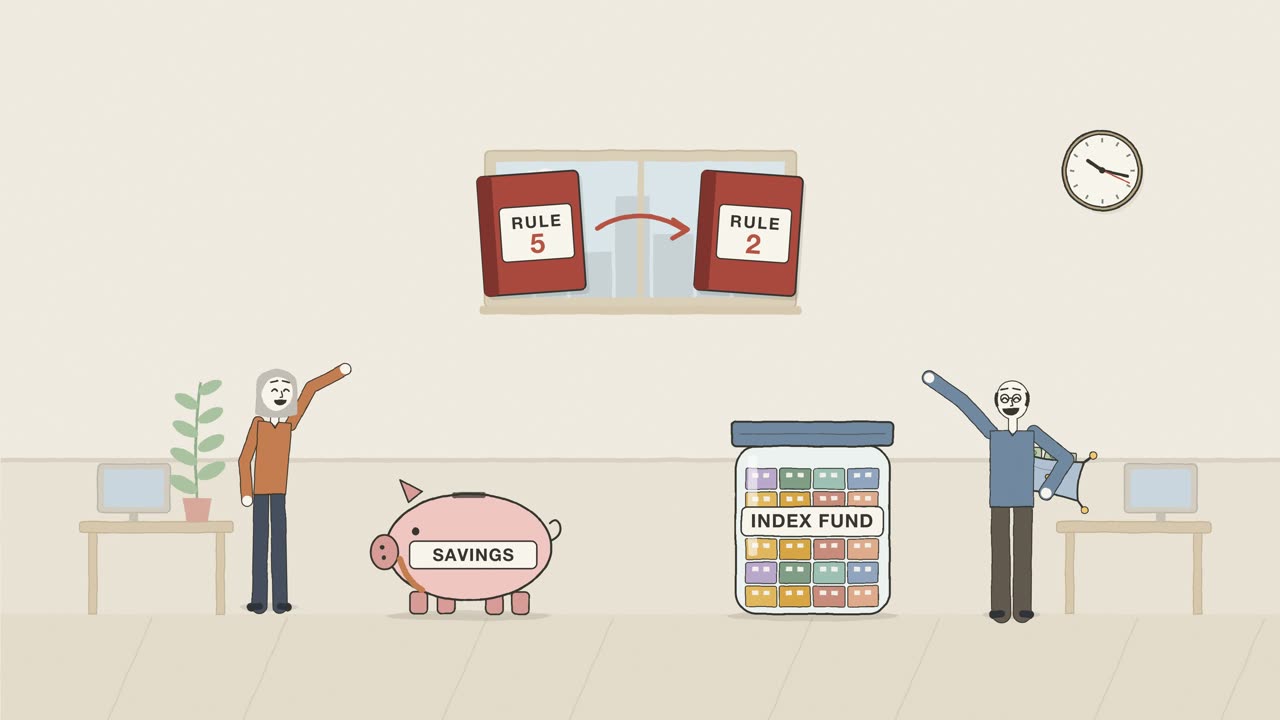
Rule 2: crashes are sales. In 2008 stocks fell 37%; by early 2014 they had almost tripled from the bottom. The edge is money to spare: if you never need to sell in a crash, you can keep buying. In the story, Owen's $500 buys about 60% more shares in the crash year.
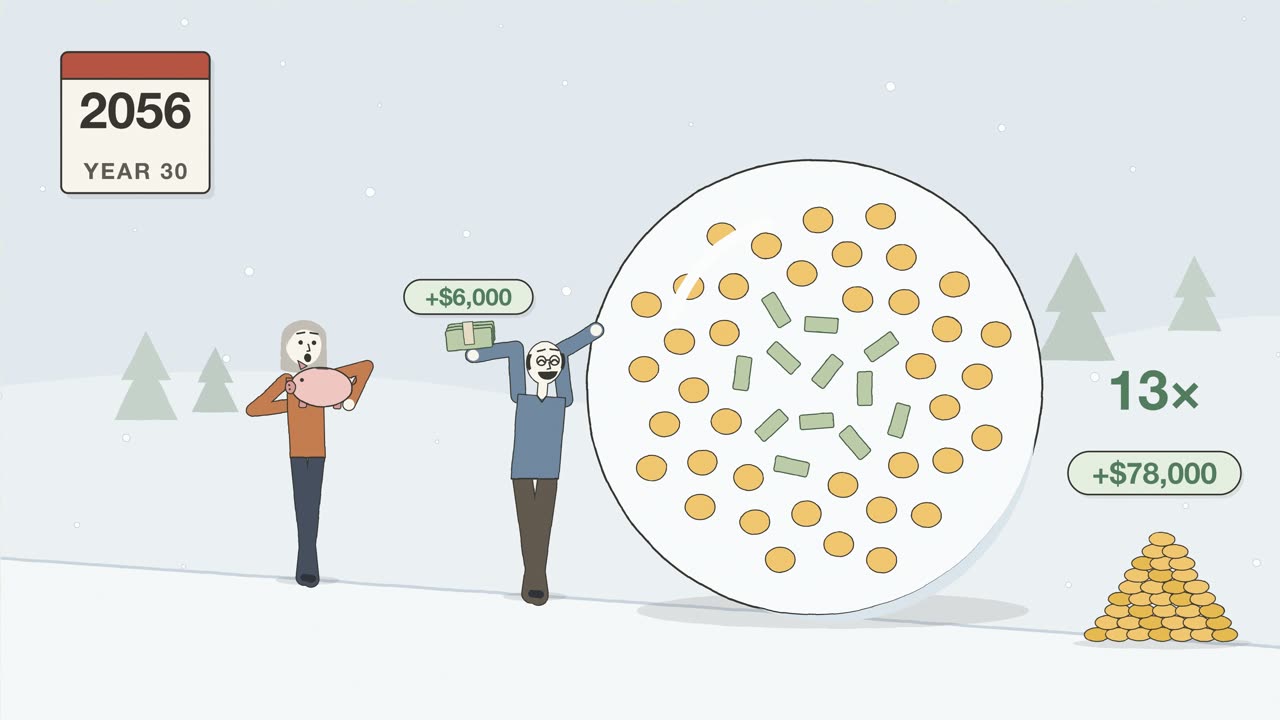
Rule 3: let it snowball. Most of Warren Buffett's fortune came after he turned 65. By year 30, in a typical year, Owen's money grows by about $78,000, thirteen times what he adds. Even at 4% in a high-yield savings account for all 30 years, Jen would end with about $344,000, less than half of Owen's.
Rule 4: buy, borrow, die. Pay is taxed before you see it; a stock's rise is not taxed until you sell, and most people pay a lower rate on long-term gains. The very rich rarely sell: some borrow against their stocks, and at death the income tax on the growth is wiped away. ProPublica found the 25 richest Americans paid federal income tax of about 3.4% of their wealth growth from 2014 to 2018; it did not accuse them of breaking the law.
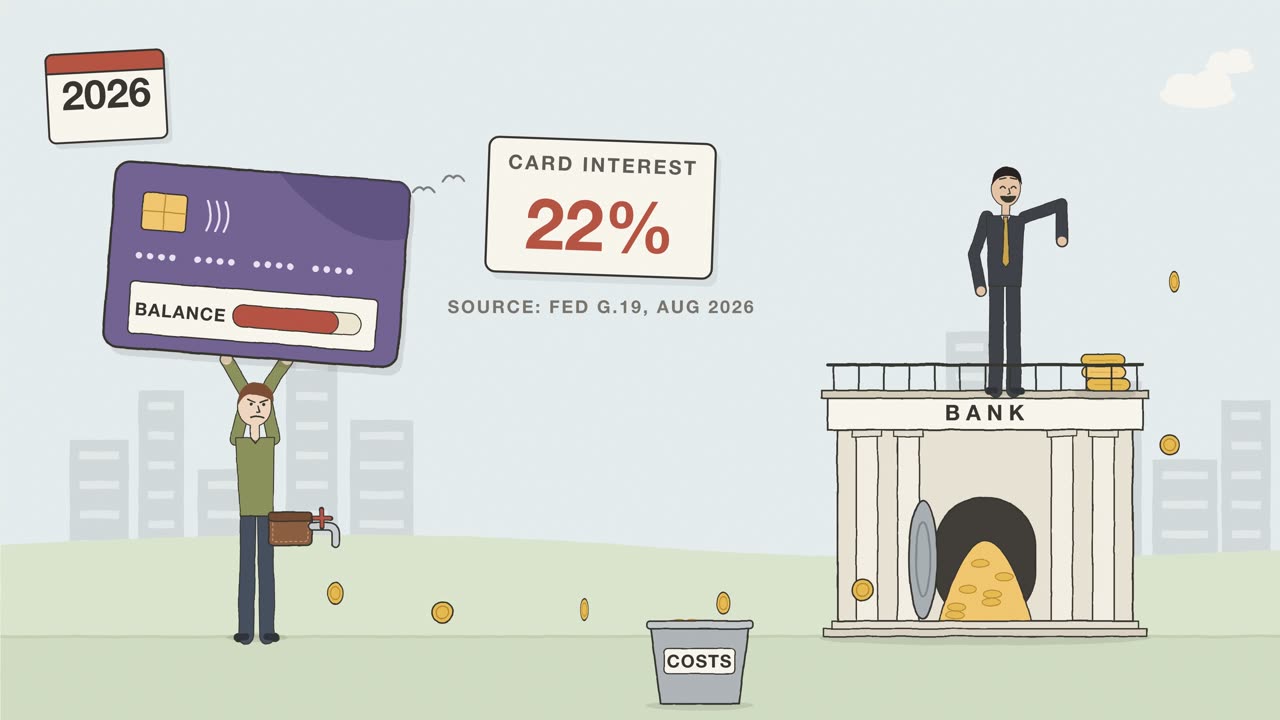
Rule 5: owe little. The lower half of families owe almost 60 cents per dollar they own; the top 1% about 2 cents. Credit cards charged about 22% in 2026. A cushion of cash pays for a broken car without interest, and it is what lets you keep buying in a crash.
Our take: you cannot copy a ten million dollar head start, but you can copy the rules. Keep enough cash for emergencies, put the rest into owning a little every payday, and leave it alone through the crashes. The sooner you start, the better.
Why do the rich get richer?
Why do the rich keep getting richer? Because they follow a few simple rules. And almost every one of those rules is open to you.
In mid 2026, the top 1% of families held about a third of all American wealth. The whole bottom half held about 2%. To watch the rules at work, meet two coworkers.
Jen and Owen start the same job, at the same pay, about $65,000 a year. That is close to what a typical full time worker makes. Each one sets aside $500 a month.
Jen keeps hers in a savings account. Owen uses his to buy small pieces of companies. 30 years later, Owen has about four times as much as Jen.
Same pay. Same savings. Different rules.
Here are the five rules. Watch which ones Owen follows, and which ones you already do.
Rule 1: own things that grow

Rule one. Own things that grow. For the top 1%, more than half of what they own is stocks and funds.
For the bottom half, outside retirement plans, it is about four cents of every dollar. Their biggest things are a home, if they have one, then cars and furniture. Cars lose value every year.
A paycheck stops when you stop working. Things you own keep earning while you sleep. Say a family has $10 million invested.
At 7%, it grows about $700,000 in a year. Nobody has to go to work for it. Often, that head start came from family.
Money passed down, good schools, people who open doors. Those are real advantages. Only about one in five families ever gets an inheritance.
But the rules work at any size. The rich just play them with bigger numbers.
Saving vs investing: cash or an index fund?
Owen plays this rule small. He buys an index fund. An index fund is a fund that owns a slice of every company on a list.
His fund follows the S&P 500, a list of about 500 of the biggest companies in America. When those companies do well, his slice is worth more. Jen's account pays interest.
Interest is what the bank pays you for keeping your money there. Hers pays less than half a percent a year. That is about the national average in 2026.
Owen's ride in our story is made up, but shaped like history, with two big crashes. It averages about 7% a year, less than stocks have done since 1985. And the first crash comes fast.
In year two, Owen's fund drops by almost a third. Owen has put in $12,000. His fund shows about 9,500.
Jen has a little over 12,000. Not $1 of it moved. Cash does not crash.
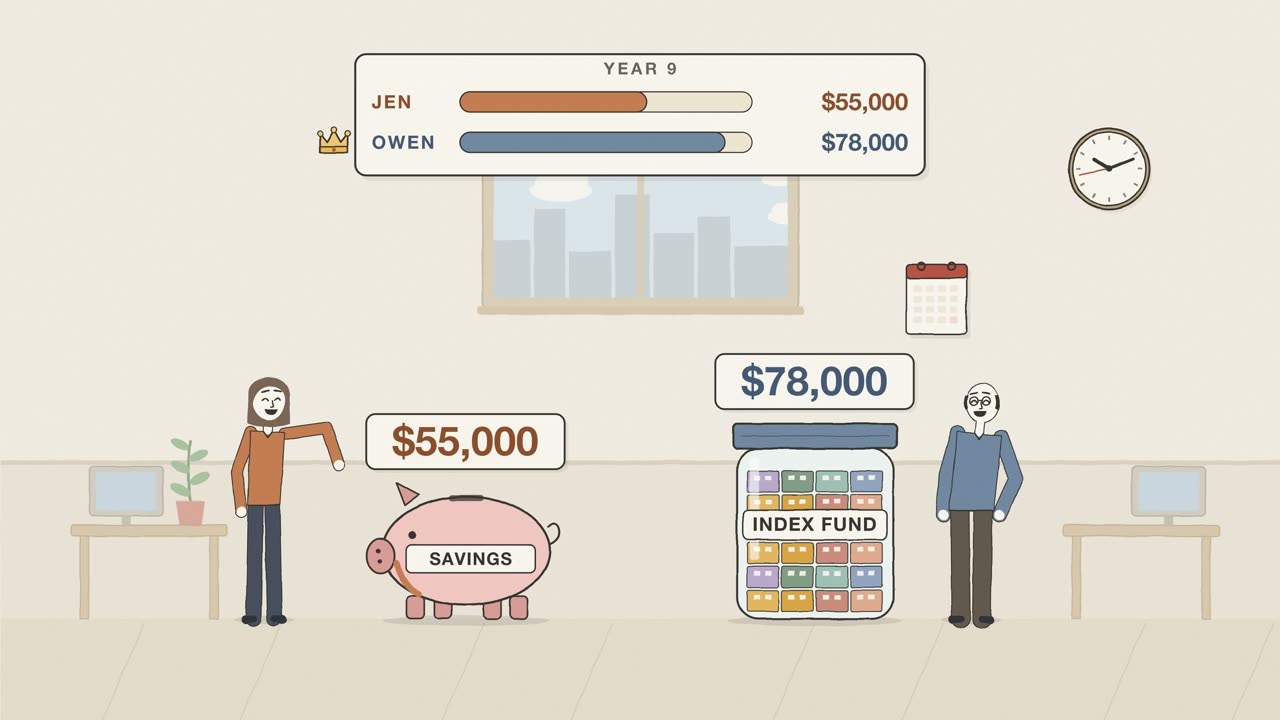
But Owen keeps buying, and the market comes back. In year four, Owen takes the lead. By year nine, Owen has about $78,000.
Jen has about 55,000.
How inflation quietly shrinks your savings
Then a twist. Jen's money has a problem she cannot see. On average, prices go up about 3% a year.
That is inflation, the slow rise in what everything costs. Her account grows much slower than that. So every year, each of her dollars buys a little less.
By year nine, Jen has about $55,000. But prices went up the whole time. So her 55,000 only buys as much as 42,000 did when she started.
She put in 54,000. Her balance went up. What it buys went down.
Now here is the other side of rising prices. When a cup of coffee costs more, the coffee shop takes in more money. Its costs rise too, but over time its profits tend to keep up.
Owen owns a tiny slice of companies like that. So over the long run, what he owns tends to rise with prices. Owning keeps up.
Cash falls behind. If your savings pays less than prices rise, you are playing Jen's game.
Rule 2: why a stock market crash is a sale
Rule two. Crashes are sales. In 2008, stocks fell 37% in one year.
Many people sold in fear. Some had lost their jobs and needed the cash. By early 2014, stocks had almost tripled from the bottom.
Anyone who held on got it all back, and more. The edge is money to spare. If you never need to sell in a crash, you can keep buying.
In our story, year 10 brings a crash just that size. Owen's fund drops to about $54,000. Jen has about 61,000.
Jen is back in the lead. And all around Owen, people are selling. Owen keeps buying.
Now his $500 goes further. Each share costs more than a third less than a year ago. So the same $500 buys about 60% more shares.
It is a sale. It just does not feel like one. The next year, the market bounces back.
Owen is ahead again, about 75,000 to 67,000. In the end, those bargain shares alone are worth about 38,000. If you sell in a crash, you keep the loss and miss the sale.
Rule 3: compound interest explained
Rule three. Let it snowball. Warren Buffett bought his first stock when he was 11.
Yet most of his fortune came after he turned 65. He was a great investor. But his real secret was time.
His money just had more years to grow. That is compounding, growth on top of growth. It works like a snowball rolling downhill.
The bigger it gets, the more snow it picks up. Owen's snowball starts small. At first, most of his pile is money he put in himself.
By year eight, in a typical year, his fund grows by more than he adds. By year 30, in a typical year, Owen's money grows by about $78,000. That is 13 times what he adds in a year.
30 years later: cash vs investing
Owen ends with about $778,000. Jen ends with about 191,000. But prices rose the whole time.
So Jen's money only buys as much as 79,000 did when she started. Less than half of what she put in. Owen's buys as much as 320,000 did.
To be fair to Jen, she could have used a high yield savings account. That is a savings account that pays more interest, often at an online bank. Even at 4% for all 30 years, she would end with about 344,000.
Less than half of Owen's. Time is what turns a little money into a lot. If you start at 25, your snowball gets about 40 years to roll.
Rule 4: the buy borrow die strategy

Rule four. Buy, borrow, die. A paycheck is taxed before you ever see it.
When a stock's price grows, there is no tax until you sell. And when you do, most people pay a lower rate than on their pay. The very rich rarely sell.
When they need cash, some borrow against their stocks instead. A loan is not income, so there is no tax on it. And when they die, the income tax on all that growth is wiped away.
Only very large estates face an estate tax. Buy, borrow, die. Most of us cannot borrow against millions.
But we can own, and hold.
How much tax the richest Americans pay
From 2014 to 2018, the 25 richest Americans grew about $400 billion richer. Their federal income tax came to about 3.4% of that.
A typical family in its early forties paid almost as much in tax as it grew richer. ProPublica did not accuse them of breaking the law. That is simply how the tax rules work.
Owen gets a small version of this rule. The rise in his fund's price is not taxed until he sells. In a retirement account at work, the tax breaks can be bigger still.
Rule 5: owe little
Rule five. Owe little. Families in the lower half owe almost 60 cents on each dollar of what they own.
The richest 1% owe about two cents. So most families pay interest on what they owe. The rich owe almost nothing for their size.
In 2026, credit cards charged about 22% a year to people carrying a balance. Much of that interest becomes profit for the bank and its owners.
Why an emergency fund protects your investments
Here, Jen's cash finally shines. Say your car dies and the fix costs $3,000. Put it on a card, and you start paying interest to someone else.
Pay with a cushion of cash, like Jen, and you pay nobody. In our story, Owen keeps a small cushion too. Without it, a broken car in year 10 would have forced him to sell at the bottom.
A cushion is what lets you keep buying in a crash. Rule five is what makes rule two possible.
Pros and cons: saving vs investing
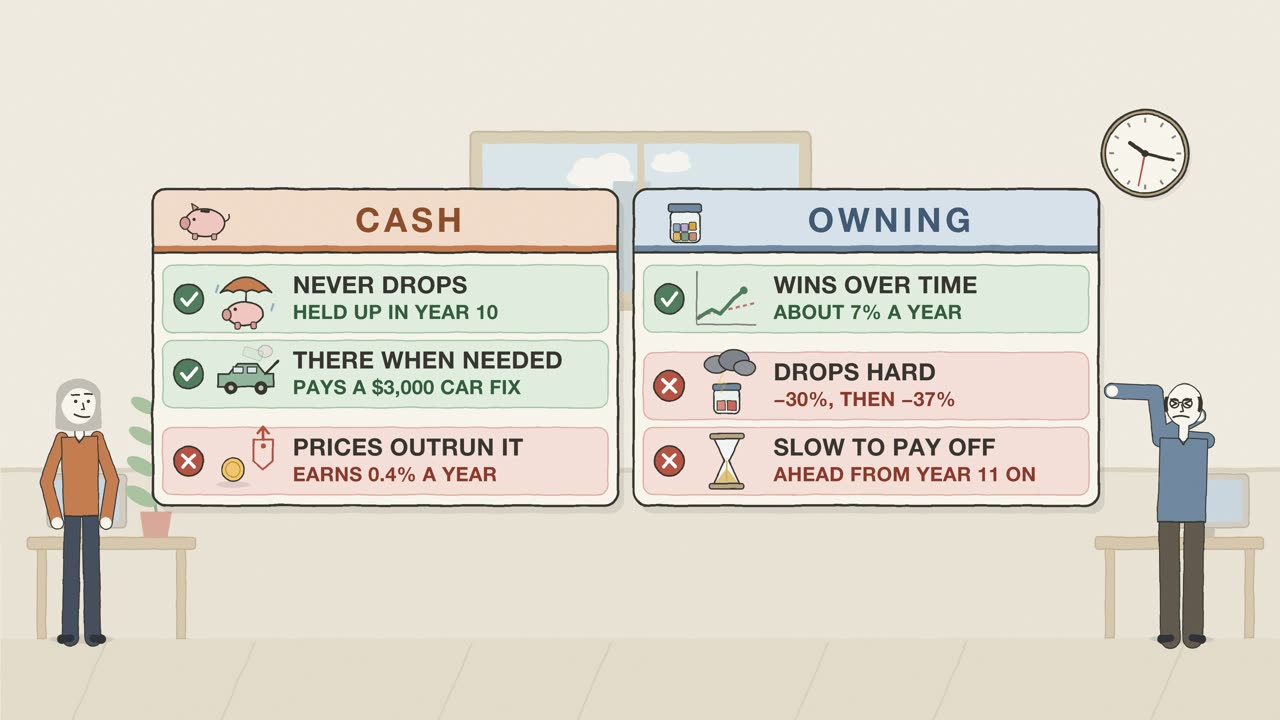
Here is the score, in plain words. Cash is safe from crashes, and ready for emergencies. But at most banks, it quietly shrinks.
Owning grows faster than prices. But it crashes sometimes, and it takes years.
3 steps anyone can copy
Here is a strategy many people recommend. It has three steps. Step one.
Keep some cash for emergencies. Many planners suggest three to six months of bills. That is rule five.
When the car breaks down, you never touch a credit card, and you never sell in a crash. Step two. Own something that grows, every payday, like Owen.
That is rules one and three. A broad index fund is the simple version. If your job has a retirement plan, it may offer one.
Step three. When the market crashes, keep buying. That is rule two.
Set it to happen on payday, so you never have to decide.
So why do the rich keep winning?
So, why do the rich keep winning? Because they follow five rules. They own things that grow.
They never have to sell in a crash. They let it snowball for decades. They let the tax rules work for them.
And they rarely pay high interest. They just play with bigger numbers. Jen and Owen saved the very same amount.
After 30 years, Owen had about four times as much.
Our take
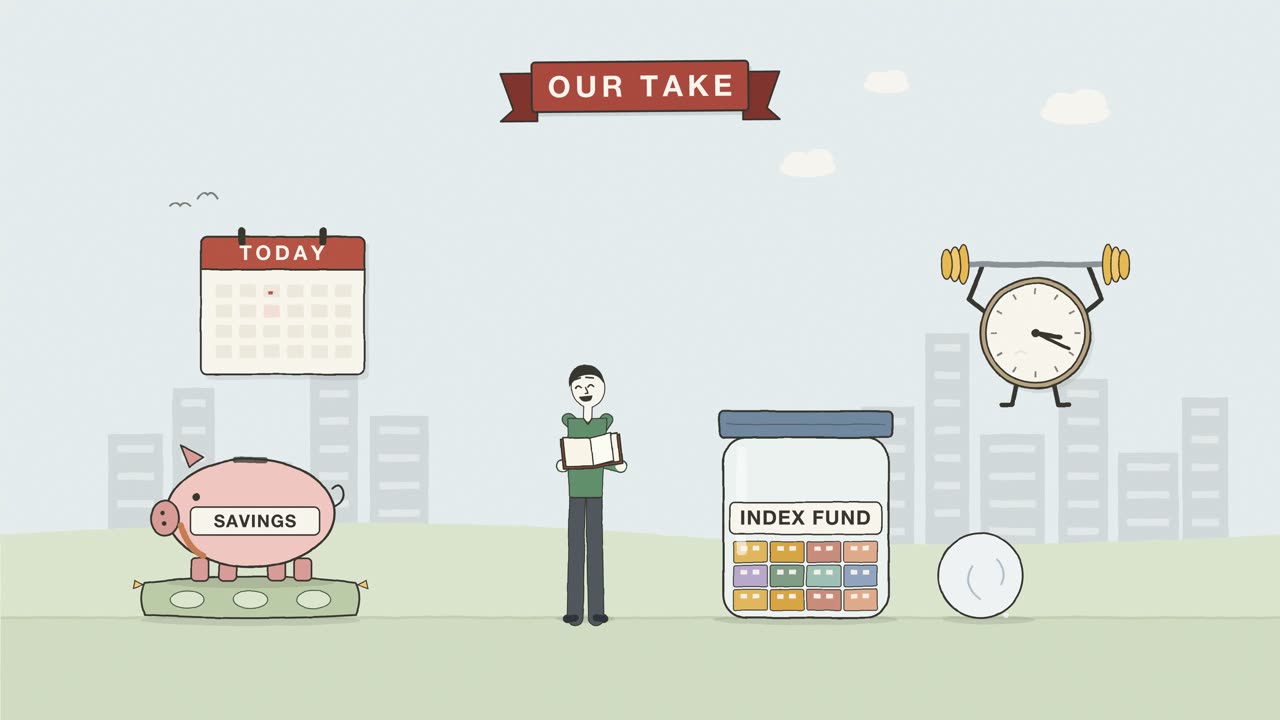
Here is our take. You cannot copy a $10 million head start. But you can copy the rules.
Keep enough cash for emergencies, and not much more sitting idle. Put the rest into owning, a little every payday, and leave it alone through the crashes. Time does the heavy lifting, so the sooner you start, the better.
Jen saved money. Owen owned things. The rich are not playing a different game.
They just started playing it sooner.